regulation•
Latest Peptide Wire
regulation•
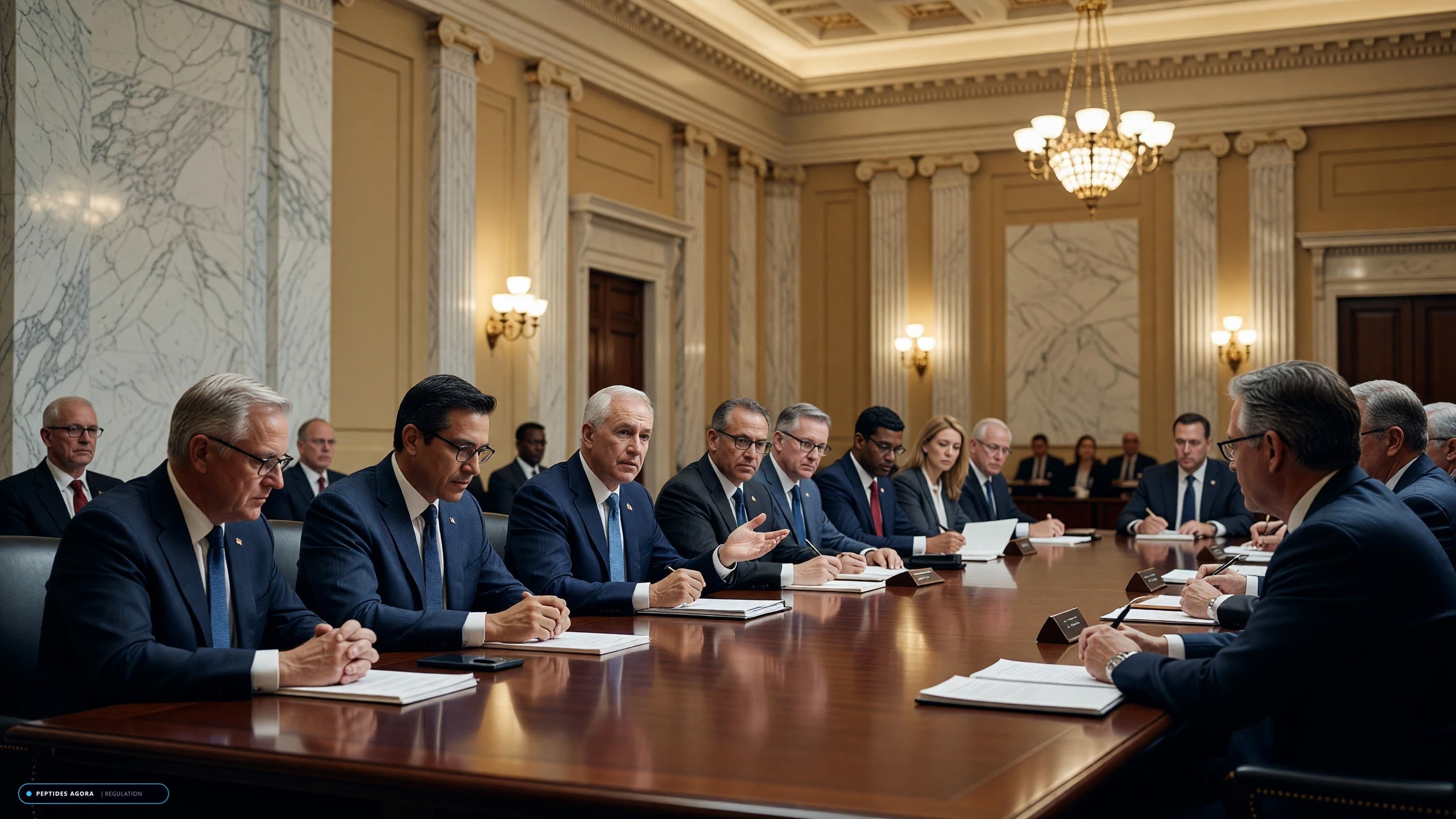
FDA Staff Opposed All Seven Peptides. The Advisory Panel Overruled Them.
regulation•
Inside the FDA Vote: How the 'RFK Jr. Effect' Reshaped Peptide Policy
regulation•
FDA Advisory Panel Sides With Kennedy's Peptide Agenda Over Its Own Scientists' Warnings
sports•
Ultrarunner Mike McKnight's BPC-157 Admission Forces Anti-Doping Reckoning in Endurance Ra

research
Aizen Signs $100M AI Peptide Deal
Aizen Therapeutics, a San Diego-based AI biotech spun out of Caltech, has entered a multi-program collaboration with an undisclosed public partner. The deal includes upfront funding and up to $100 million in milestone payments per target.

Deep Dives

industry
Eli Lilly Targets Illicit Market for Unapproved Weight-Loss Peptide
The drugmaker is suing four online peptide sellers, a California med spa, and a compounding pharmacy for marketing an unapproved triple-receptor agonist to consumers under a 'research use' label.

industry
Eli Lilly Files Six Federal Lawsuits to Dismantle the Retatrutide 'Research-Use Only' Mark
Eli Lilly filed six federal lawsuits against compounding pharmacies, med spas, and online sellers marketing unapproved retatrutide as 'research-use only,' challenging a labeling convention the drugmaker says conceals illegal human.
Research Guides & Protocols

anti-doping
Are Peptides Banned by the NCAA? Rules and Verification
The NCAA explicitly bans peptide hormones, growth factors, and related substances. This prohibition applies year-round. A positive test for BPC-157 or MK-677 results in a minimum one-year loss of eligibility, with very narrow exceptions.
approval-and-legality
Are Peptides Legal? FDA Tiers, Compounding Bans, and the 2026 Regulatory Gap
Not all peptides are legal in the United States. FDA-approved drugs like insulin are lawful, while unapproved compounds face strict compounding bans. Recent regulatory shifts have created a complex landscape where legality hinges on.

risks-and-adverse-effects
FDA Vote Puts Unapproved Peptides in Compounding Pharmacies Despite Safety Warnings
FDA advisers voted to allow compounding pharmacies to produce six unapproved peptides. The decision overrides agency warnings that these products lack human trial data and carry risks of contamination and incorrect dosing.

synthesis-and-manufacturing
Custom Peptide Synthesis: Process and Quality Controls
Custom peptide synthesis uses solid-phase synthesis to construct user-defined sequences. Chemists verify each step via in-process testing, while post-synthesis quality control uses mass spectrometry and HPLC to confirm purity tiers.

approval-and-legality
FDA-Approved Peptides: What Approval Actually Means
While semaglutide and insulin are approved drugs with validated safety data, peptides like BPC-157 and TB-500 are not. Understanding the difference between drug approval and compounding eligibility is critical for patient safety.
research-peptide-market
\"Research Use Only\" Labels Cannot Substitute for GMP Standards in the Peptide Market
\"Legal to sell and entirely unpoliced for quality,\" grey market peptides operate in a regulatory vacuum where \"research use only\" labels do not guarantee purity, sterility, or accurate dosing. Independent lab analyses have found endotoxin.
Newsroom Analysis & Industry Wire




Trending Coverage
Coming Soon• Launching Q3 2026
The Agora Discussion Forum
Our moderated peer forum for independent peptide researchers, laboratory COA verification megathreads, and reconstitution protocol discussions is currently under construction.